
Often, yes — but not for everything, and not automatically. Alberta’s no-fault (“Care-First”) system begins January 1, 2027 and ends the right to sue most at-fault drivers. The new system keeps an exception for drivers found guilty of a serious offence, and impaired driving is one of them. Below, I explain how that exception works, what the exception is actually worth, what “found guilty” really means for your claim, and what to do if a drunk driver injured you.
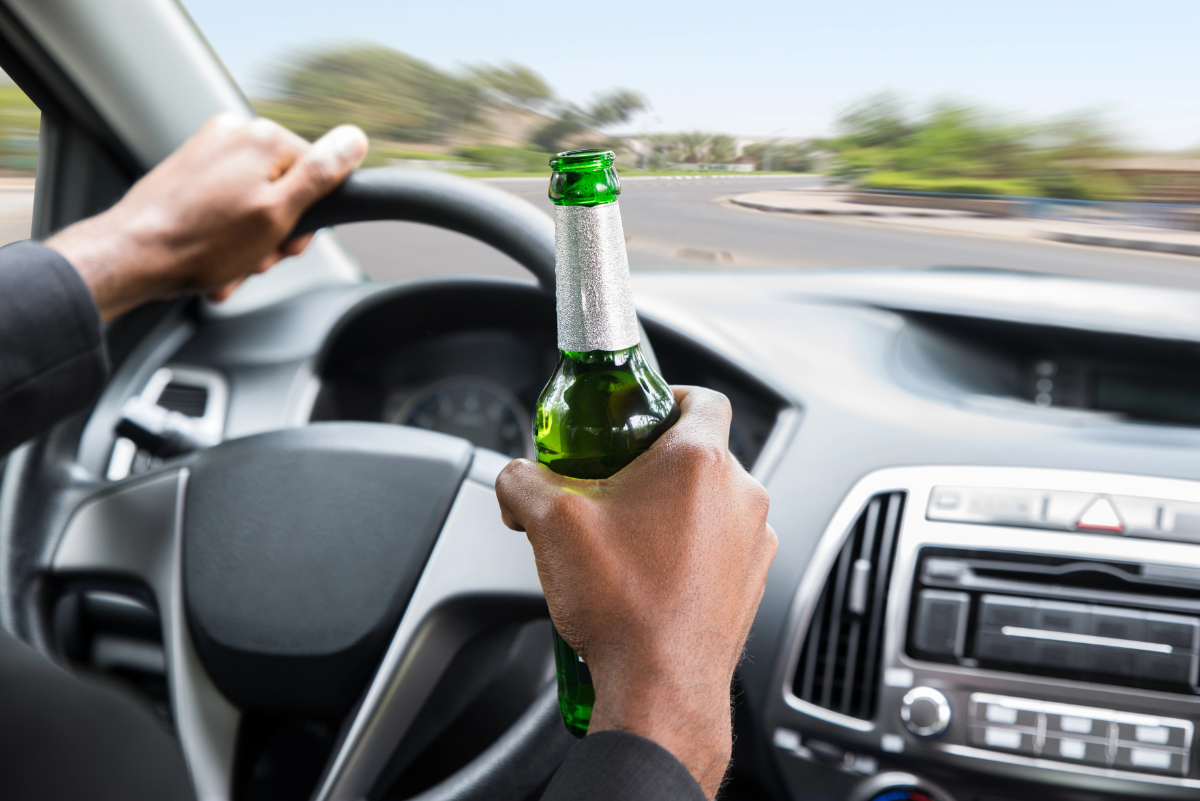
For most crashes on or after January 1, 2027, no-fault rules apply: you claim a set schedule of benefits from your own insurer, and you cannot sue the driver who hurt you. The main exception is when the at-fault driver is found guilty of a prescribed offence — for example, impaired driving, refusing a breath test, dangerous operation of a vehicle, failing to stop after an accident, or criminal negligence causing bodily harm or death — or when the driver is issued a prescribed roadside administrative penalty, which requires no criminal charge at all. In those cases you can still take that driver to court, though for a narrower set of losses than today’s system allows. I set out exactly which losses below.
And if your crash happened before January 1, 2027, no-fault rules do not limit you — your claims stay under the current system, which preserves your right to sue for the full range of your losses. For the bigger picture of what’s changing, see our Alberta no-fault insurance overview.
Today, Alberta uses a “tort” system: if a careless driver injures you, you can pursue that driver — through their insurer — for the full range of your losses, and a court decides what’s fair. Under no-fault, that changes. Your own insurer pays a fixed schedule of benefits regardless of who caused the crash, and for most claims there is no lawsuit and no judge weighing your evidence. For a fuller explanation, see What Is No-Fault Insurance?
That shift is exactly why the drunk-driving exception matters so much.
Under Care-First, an injured person keeps the right to sue an at-fault driver who is found guilty of certain serious offences. The published regulations (AR 205/2026) prescribe
“Found guilty” is strict: a discharge, diversion, or similar non-conviction outcome does not count. And separately from the criminal list, a driver issued a prescribed roadside administrative penalty can be sued with no charge and no conviction.
If the exception for serious offences applies, you are not confined to the benefit schedule. But this is not a return to today’s rights, and you should know the difference before you rely on the exception. Under the published regulations, the claim is limited to:
One category of damages is gone entirely. Today, a court can award damages for loss of earning capacity — the value of a career your injury has taken from you, even where actual lost wages are hard to prove. That award is often the largest for a young worker or an apprentice. Under the new Act, no such damages can be claimed, even against a guilty impaired driver. What survives is narrower: actual income loss, and only the portion above the insured ceiling.
There is also a trap worth knowing about now, while you can still do something about the trap. If your insurer offered you optional excess coverage and you declined the offer, the regulations bar the financial-loss claim for the layer the declined option would have covered — even against a driver found guilty of impaired driving. (The pain-and-suffering claim survives; the bar applies to the financial-loss layer.) The same rule applies on every renewal, and unless your insurer, agent, or broker was grossly negligent, you cannot sue any of them over the declined coverage. Important: Before January 1, 2027, ask your broker in writing what excess coverage is available and what you give up by saying no.
So the exception claim sits on top of your Care-First benefits — the treatment coverage, income replacement, and permanent impairment lump sum your insurer pays under the government’s schedule — not in place of them. For someone with a catastrophic injury and a career cut short, the additional claim can still be worth a great deal. The exception claim is simply not the same claim you would have had a year earlier.
The published regulations settle this point: the guilty driver’s insurer must not defend the claim, must not pay the judgment, and must not cover the legal costs — and you cannot recover the judgment from your own insurer either.
Today, when you sue an impaired driver, their insurer defends the case and pays what the court awards. After 2027, in an exception claim, you will be pursuing that individual personally. If they have no assets, a judgment in your favour may be difficult to collect.
The practical question (is there anything that can be recovered?) has to be asked early. That question also provides one more reason to get legal advice before the criminal matter is resolved.
The exception depends on the at-fault driver being found guilty — or being issued a qualifying roadside penalty. Charges are sometimes never laid. Charges are sometimes dropped. Drivers sometimes plead to a lesser offence that does not qualify, and a discharge or diversion does not count as a finding of guilt. If no qualifying finding of guilt or penalty exists, then for a crash after January 1, 2027 your right to sue that driver is gone.
One thing the regulations do give you is time. Your two-year deadline to sue the driver is not treated as running until the finding of guilt or the penalty notice — so a slow prosecution should not by itself cost you the claim, though the wait to learn whether you have a claim can be long.
As a result, the criminal side of your case suddenly matters more than ever before — which is another reason to involve an experienced injury lawyer early. The steps taken soon after the crash, and how the criminal matter unfolds, can directly affect what you are ultimately able to recover.
Not necessarily. The no-fault bar is aimed at the driver. The Act itself preserves claims against certain other parties who contributed to a crash, regardless of whether anyone is convicted. For instance, you may be able to sue a bar or restaurant that over-served the driver, a private host who did the same, a vehicle manufacturer or seller, a garage whose work contributed to the collision, or a municipality responsible for the road. Those claims are harder and slower to prove, but if no charge is laid, do not assume the file is closed. If you were hurt by an impaired driver, learn more on our Edmonton Drunk Driver Accident Lawyer page.
(The qualifying offences are set out in the Exclusions and Tort Bar Exceptions Regulation, AR 205/2026, now published by the Alberta King’s Printer.)
If you were injured by a drunk driver before the switch to No-Fault Insurance, your claim is generally governed by the current tort system. That means your right to sue the at-fault driver is preserved whether or not they are convicted — you do not need to wait for a criminal outcome to pursue your losses. But time limits apply: in Alberta you generally have two years from the date of the crash to start a lawsuit, with limited exceptions. Don’t let that window close. See How the Personal Injury Claim Process Works.
Make sure police attend and document the impairment. Starting January 1, 2027, a charge and finding of guilt for impaired driving, dangerous operation of a vehicle, or failing to stop after an accident — or a roadside penalty — directly affects your civil right to sue.
For crashes before January 1, 2027, yes — whether or not the driver is convicted. For crashes on or after that date, your right to sue the driver depends on a qualifying finding of guilt or roadside penalty. Starting January 1, 2027, without a finding of guilt or a roadside penalty, the Alberta government has eliminated your right to sue, and you may be limited to no-fault benefits. Other parties who contributed to the crash — a bar or host who served the driver, for example — may still be liable regardless.
Yes to both. Dangerous operation of a vehicle is a prescribed offence. So is a hit-and-run — and Alberta’s list actually covers two distinct scene-fleeing offences: failing to stop after an accident, and flight from a peace officer. A driver found guilty of either one can be sued. Criminal negligence causing bodily harm or death and manslaughter are prescribed as well. If the at-fault driver is found guilty of any qualifying offence — or issued a prescribed roadside penalty — the exception allowing a lawsuit applies. Always seek qualified legal assistance.
In Alberta you generally have two years from the date of the crash to start a lawsuit, with limited exceptions. For a post-2026 claim against the driver, the clock is not treated as running until the finding of guilt or the penalty notice. Acting early also helps preserve evidence.
About the author: Joseph A. Nagy is an Edmonton injury lawyer with more than 22 years of experience, licensed in Alberta and British Columbia. He has represented hundreds of people injured by impaired drivers and represents injured people only — never insurers.
Joseph A. Nagy is an Edmonton personal injury lawyer with more than 22 years of experience, licensed in Alberta and British Columbia, and has handled thousands of motor-vehicle injury claims — including hundreds for victims of impaired drivers. His firm represents injured people only, never insurers, and is a proud supporter of FAIR Alberta. (See Joseph A. Nagy, Edmonton Injury Lawyer.)
Hurt by a drunk driver? Your consultation is free. Call (780) 760-4878 (HURT) or request a free consultation.